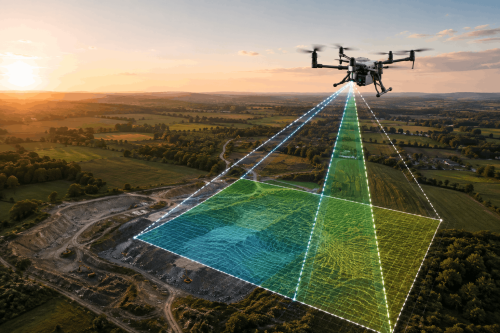
Commercial drone roof inspections use high-resolution aerial imagery to document visible roof defects and difficult-to-access areas. They help UK facility managers prioritise maintenance, maintain condition records and decide when closer investigations are needed.
Large commercial roofs can be challenging to inspect. Rooftop plant, drainage systems, fragile coverings and restricted access all complicate routine maintenance.
For facility managers responsible for multiple buildings, drone roof inspections offer a practical way to collect consistent visual evidence before arranging targeted repairs.
What Can a Commercial Drone Roof Inspection Identify?
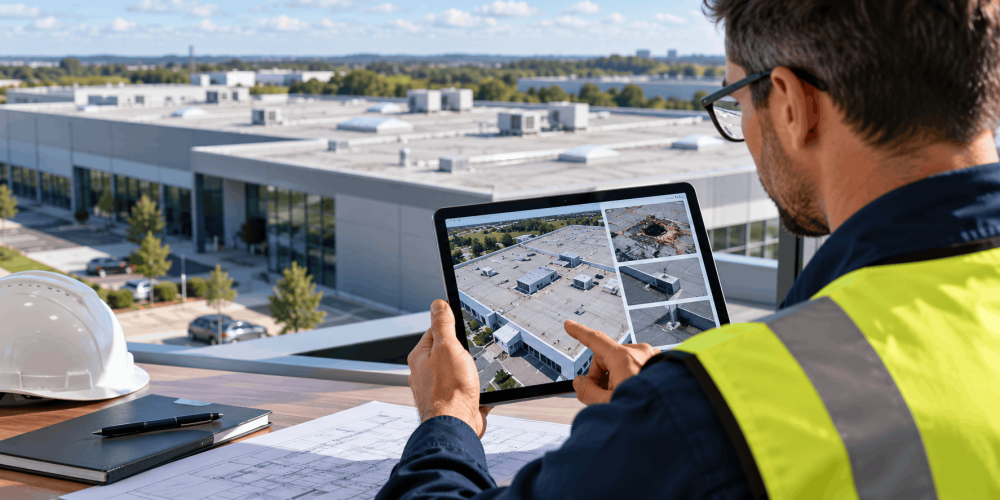
A commercial roof drone survey captures photographs of accessible roof surfaces, drainage features and rooftop equipment.
Depending on visibility and image quality, inspectors may identify-
- Damaged or displaced roof coverings.
- Visible deterioration around flashings and joints.
- Blocked gutters and drainage outlets.
- Ponding water or staining.
- Damaged rooftop fixtures and plant surrounds.
- Areas requiring closer investigation.
Drone imagery can highlight observable defects, but it cannot confirm every hidden waterproofing failure or structural problem.
Why Use Drones for Industrial and Commercial Roof Surveys?
Reduce Unnecessary Work at Height
Traditional roof inspections may require ladders, scaffolding or mobile elevating work platforms.
Drone building inspections can reduce the need for direct access during initial visual assessments.
However, safe flight planning remains essential, particularly around occupied buildings, public areas and rooftop obstacles.
Create Better Maintenance Records
High-resolution imagery gives facilities teams a dated visual record of roof condition.
Repeat inspections can help track deterioration, compare repair outcomes and support maintenance budgeting.
Prioritise Follow-Up Inspections
Not every visible anomaly requires immediate repair.
An organised roof condition survey helps identify which areas need closer examination by qualified roofing or building specialists.
When Is Thermal Imaging Useful for Roof Inspections?
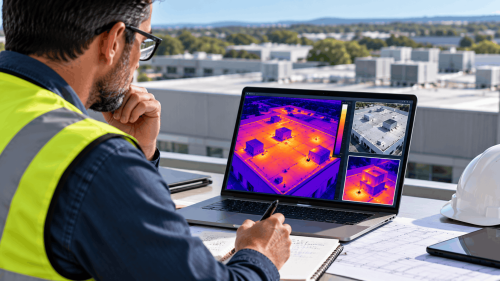
Thermal drone inspections record temperature differences across visible surfaces.
Under suitable conditions, thermal patterns may indicate areas worth investigating for moisture-related issues or insulation differences.
However, solar heating, roof materials, weather and building operation can affect thermal results.
Thermal imagery should therefore guide further investigation rather than be treated as definitive proof of a leak.
What Should a Drone Roof Inspection Report Include?
A useful report should help the facilities team take action.
Ask for:
- Clear, high-resolution photographs.
- Roof plans or location references.
- Annotated areas of concern.
- Inspection coverage and limitations.
- Prioritised follow-up recommendations.
- Historical comparisons where available.
AUAV UK’s Roof & Building Inspections service includes condition reporting, high-resolution imagery, 3D models and access to its inSite data platform.
How Should UK Facility Managers Plan an Inspection?
Before commissioning a drone roof survey in the UK, define the buildings, roof types, inspection objectives and required outputs. Confirm access arrangements, operational restrictions and whether specialist thermal imagery is necessary.
Commercial flights must comply with applicable UK Civil Aviation Authority requirements. The inspection plan should also account for people, neighbouring properties and any restricted airspace.
For large property portfolios, consistent reporting formats are especially valuable.
Arrange a Commercial Roof Inspection with AUAV UK
Reliable building maintenance starts with clear evidence of current roof condition.
AUAV UK supports building owners and facilities teams with aerial inspection imagery, roof condition reporting and structured asset records.
Managing a commercial building or property portfolio?
Contact AUAV UK to discuss your roof inspection requirements, site access and preferred reporting format.
Frequently Asked Questions
Can a drone roof inspection identify leaks?
A drone roof inspection can identify visible damage and potential moisture-related indicators. However, confirming the source of a leak may require internal checks, moisture testing or direct inspection by roofing specialists.
Do commercial drone roof inspections require scaffolding?
Commercial drone roof inspections can often collect initial visual evidence without scaffolding. However, repairs, physical testing and some close-access investigations may still require scaffolding, elevated platforms or specialist access arrangements.
How often should commercial roofs be inspected by drone?
Commercial roof inspection frequency depends on roof condition, age, exposure, maintenance requirements and recent weather events. Facility managers should establish inspection intervals with suitable building specialists rather than follow one universal schedule.
Can thermal drones detect trapped moisture in flat roofs?
Thermal roof surveys may reveal temperature patterns associated with moisture under suitable conditions. However, material properties, weather and heating effects influence results, so suspected moisture requires appropriate verification before repairs.
What affects the cost of a commercial drone roof inspection?
Drone roof inspection costs depend on building size, roof complexity, location, flight restrictions, sensor requirements and reporting detail. Providing site plans and inspection objectives helps contractors prepare an appropriate quotation.